

Blog
Periodontitis and Systemic Diseases: Why Gum Health Matters Beyond the Mouth

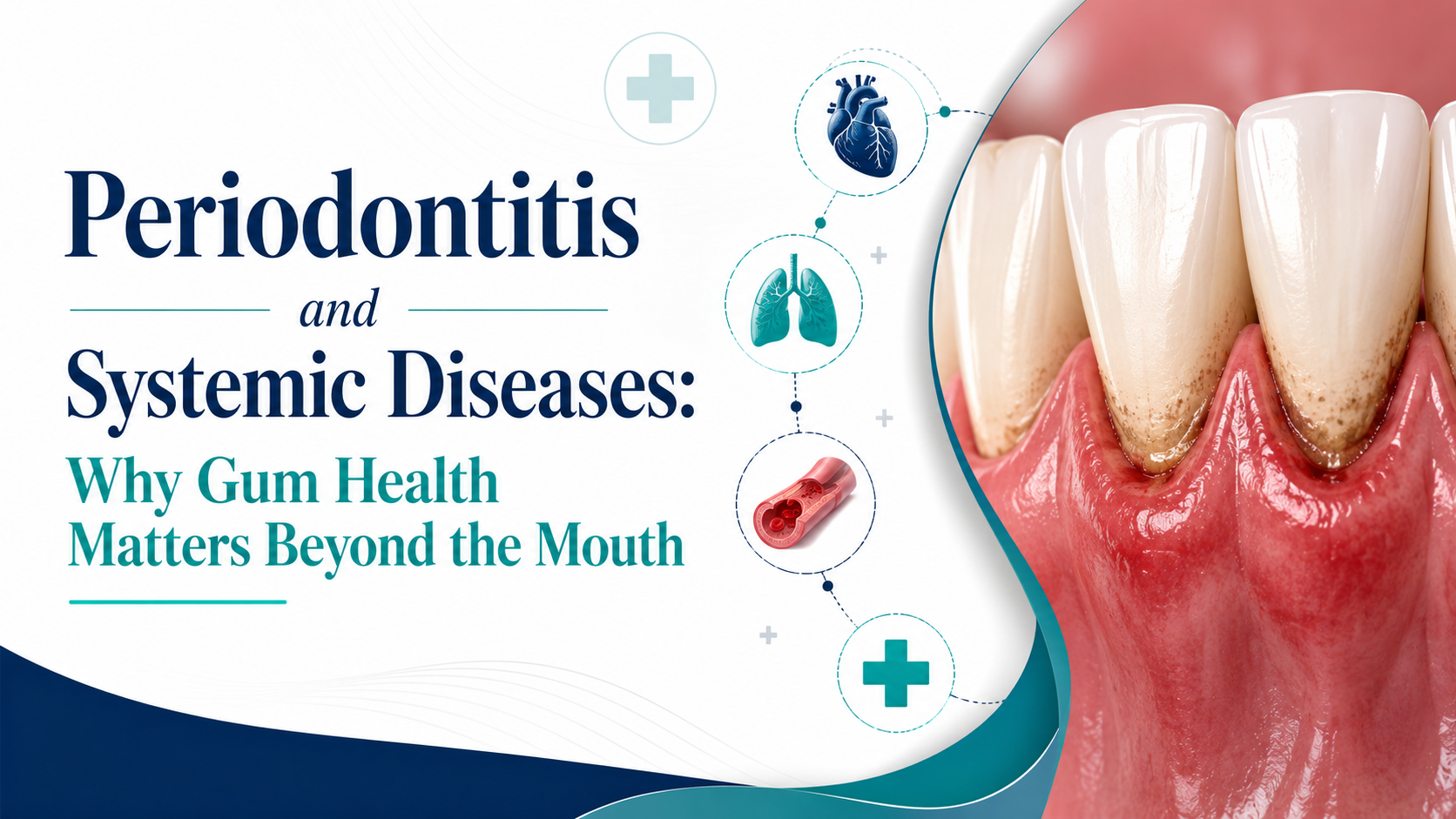
For many patients, bleeding gums are seen as a small dental issue. Some ignore it because there is no pain. Some brush harder, change toothpaste, or wait until the tooth becomes mobile. Unfortunately, this is where the real problem begins.
As a periodontist, I strongly believe that gum disease should not be treated as a “local mouth problem” only. The mouth is not separate from the body. The gums are highly vascular tissues, bacterial plaque is biologically active, and chronic periodontal inflammation can become a persistent inflammatory burden on the body.
The review article “Periodontitis and systemic diseases: A literature review” by Arigbede et al. highlights this important concept. The authors reviewed literature connecting periodontitis with cardiovascular, respiratory, endocrine, musculoskeletal, reproductive, and other systemic conditions. Their central message is simple but powerful: oral health has a direct or indirect impact on general health, and dentistry should be integrated more closely with medicine.
That does not mean every patient with gum disease will develop heart disease, diabetes, or pregnancy complications. It also does not mean periodontal treatment is a replacement for medical care. But it does mean that chronic gum infection deserves much more attention than it usually receives.
What Is Periodontitis?
Periodontitis is a chronic inflammatory disease caused by bacterial plaque around the teeth. It affects the supporting structures of the teeth, including the gingiva, periodontal ligament, cementum, and alveolar bone. Over time, this can lead to periodontal pocket formation, gum recession, bone loss, tooth mobility, and eventually tooth loss.
In simple words, periodontitis is not just “gum bleeding.” It is a disease where the foundation of the tooth slowly breaks down.
Common signs include:
- Bleeding gums during brushing or probing
- Swollen or reddish gums
- Persistent bad breath
- Calculus deposits
- Gum recession
- Food lodgment
- Deep periodontal pockets
- Loose teeth
- Tooth migration
- Pain or pus discharge in advanced cases
The most dangerous part is that periodontitis can progress silently. Many patients report to the dentist only when teeth start moving, but by that stage, significant bone loss may already have occurred.
Why Should Dentists and Patients Care About the Oral-Systemic Link?
The article explains that periodontitis may act as a constant source of infection and inflammation. Oral bacteria, bacterial toxins, and inflammatory mediators may influence distant tissues through different biological pathways.
The proposed mechanisms include:
- Transient bacteremia
Bacteria from periodontal pockets may enter the bloodstream, especially during chewing, brushing, scaling, or active infection. - Circulating bacterial toxins
Bacterial products may trigger inflammatory responses beyond the mouth. - Immune-mediated inflammation
The body’s immune response to periodontal bacteria may increase systemic inflammatory mediators.
This is why periodontitis is now frequently discussed in relation to diabetes, cardiovascular disease, respiratory disease, rheumatoid arthritis, pregnancy outcomes, and overall systemic health.
A modern and honest interpretation is this: periodontitis is associated with several systemic conditions, but association does not always prove direct causation. The American Dental Association also notes that while many associations exist between periodontal and systemic diseases, direct causality remains difficult to prove, partly because these diseases share risk factors such as smoking, poor diet, and socioeconomic factors.
This balanced view is important. We should neither exaggerate the connection nor ignore it.
Periodontitis and Cardiovascular Disease
One of the most discussed links is between periodontitis and cardiovascular disease. The article reports that chronic periodontitis has been associated with coronary heart disease and atherosclerotic cardiovascular disease. It also discusses possible mechanisms such as elevated systemic inflammatory markers, including C-reactive protein and interleukin-6, and the presence of oral bacteria in atheromatous plaques.
From a clinical point of view, the message is not that gum disease alone causes heart attacks. That would be an oversimplification.
The more accurate message is:
Chronic periodontal inflammation may add to the body’s inflammatory burden, especially in patients who already have cardiovascular risk factors.
For dentists, this means periodontal diagnosis should be more serious in patients with hypertension, diabetes, obesity, smoking habits, or a family history of cardiovascular disease.
For patients, this means bleeding gums should not be ignored as a cosmetic or minor issue. Healthy gums are part of long-term health maintenance.
Periodontitis and Diabetes: A Two-Way Relationship
The relationship between diabetes and periodontitis is one of the strongest and most clinically relevant oral-systemic connections.
The article explains that people with diabetes are more prone to periodontal disease, while periodontal disease may also worsen glycemic control through systemic inflammation. It describes how bacteria and inflammatory cytokines may affect the body, including insulin-related pathways.
This is a critical point for daily dental practice.
Diabetes can increase the severity of periodontal disease because high blood glucose affects immunity, wound healing, collagen metabolism, and inflammatory response. At the same time, untreated periodontal infection may make glycemic control more difficult.
For diabetic patients, periodontal care should not be optional. It should be part of routine health management.
A patient with diabetes should ideally have:
- Regular periodontal screening
- Full-mouth periodontal charting
- Scaling and root planing when required
- Maintenance visits based on risk
- Better plaque control education
- Coordination between dentist and physician when needed
A dentist should also suspect uncontrolled diabetes when periodontal destruction is severe, generalized, or disproportionate to local plaque levels.
Periodontitis and Respiratory Disease
The article discusses evidence linking poor oral hygiene and periodontitis with respiratory diseases, especially pneumonia in high-risk elderly individuals and hospitalized patients. It explains that the oral cavity can act as a reservoir for respiratory pathogens, and bacteria from dental plaque may be aspirated into the lungs.
This is particularly relevant in:
- Elderly patients
- Bedridden patients
- ICU patients
- Patients with swallowing difficulty
- Patients with chronic obstructive pulmonary disease
- Patients with poor oral hygiene and heavy plaque deposits
For such individuals, oral hygiene is not only about preventing cavities or bad breath. It may be part of reducing microbial load and improving general care.
This is where dental professionals, physicians, caregivers, and nursing staff must work together. Oral care protocols in hospitals and nursing homes should not be treated as secondary.
Periodontitis, Pregnancy, and Low Birth Weight
Pregnancy is a state where inflammatory balance matters. The article reviews studies reporting significant associations between periodontitis and preterm birth or low birth weight. It discusses possible biological pathways involving bacterial infection, cytokines, prostaglandins, and inflammatory mediators that may influence labor-related processes.
Again, we must be careful with language. We should not tell pregnant patients that gum disease will definitely cause preterm birth. That would create unnecessary fear.
The correct patient-friendly message is:
Healthy gums during pregnancy are important because periodontal inflammation may contribute to systemic inflammatory burden, and pregnancy-related gum changes should be monitored early.
Pregnant patients should be advised to seek dental care if they notice:
- Bleeding gums
- Swelling of gums
- Pregnancy gingivitis
- Bad breath
- Pain or pus discharge
- Loose teeth
- Difficulty chewing
Professional dental cleaning and periodontal evaluation during pregnancy are generally safe when properly planned. Prevention and early management are better than waiting until infection becomes severe.
Periodontitis and Rheumatoid Arthritis
The article also discusses the relationship between periodontitis and rheumatoid arthritis. Both diseases share inflammatory pathways, and both involve tissue destruction mediated by an exaggerated immune-inflammatory response.
This connection is biologically plausible because both conditions involve chronic inflammation, immune dysregulation, and tissue breakdown.
For dentists, patients with rheumatoid arthritis may require special attention because manual dexterity can be compromised. Brushing and interdental cleaning may be difficult due to joint pain or deformity. These patients may benefit from:
- Powered toothbrushes
- Interdental brushes
- Customized oral hygiene instructions
- Shorter recall intervals
- Periodontal maintenance
- Collaboration with rheumatologists when required
For patients, the key message is simple: when the body is already dealing with chronic inflammation, oral inflammation should not be allowed to persist untreated.
Periodontitis, Osteoporosis, and Bone Loss
The review article mentions interest in the relationship between systemic osteoporosis, oral bone loss, tooth loss, and shared risk factors.
This is clinically relevant, especially in postmenopausal women and elderly patients. Periodontitis destroys alveolar bone locally, while osteoporosis affects skeletal bone density systemically. The relationship is complex and not always direct, but bone health, nutrition, age, hormonal status, and inflammation all matter.
A periodontist should carefully evaluate bone loss patterns in older patients and consider both local periodontal factors and systemic risk indicators.
Periodontitis and Cancer: A Cautious Interpretation
The article discusses studies that reported associations between periodontitis and certain cancers, especially head and neck squamous cell carcinoma, oral cancer, and esophageal cancer. However, it also acknowledges that the possible link is not fully clear and that cumulative infection exposure has been questioned as one possible explanation.
This section requires the most caution.
Many risk factors overlap between periodontitis and cancer, especially tobacco use, alcohol, socioeconomic status, oral hygiene, nutrition, and access to healthcare. Therefore, it would be irresponsible to tell patients that periodontitis causes cancer.
The honest clinical message is:
Poor periodontal health may be associated with higher disease burden and shared risk factors, but cancer risk must be understood in a broader context that includes tobacco, alcohol, genetics, immunity, nutrition, and lifestyle.
For dentists, this reinforces the importance of comprehensive oral examination, periodontal screening, tobacco counseling, and early referral for suspicious oral lesions.
The Most Important Clinical Lesson for Dentists
The strongest message from this article is not that every systemic disease is caused by periodontitis. The strongest message is that dentists must stop looking at the mouth in isolation.
A patient with generalized bleeding, deep pockets, suppuration, mobility, and uncontrolled plaque is not just a “scaling patient.” That patient may be carrying a chronic inflammatory burden.
Every dental clinic should make periodontal screening a routine part of examination. At minimum, dentists should record:
- Bleeding on probing
- Probing pocket depth
- Clinical attachment loss
- Mobility
- Furcation involvement
- Recession
- Plaque and calculus deposits
- Radiographic bone loss
- Smoking history
- Diabetes status
- Pregnancy status when relevant
- Relevant medications and systemic disease history
A simple mouth mirror examination is not enough for periodontal diagnosis.
What Patients Should Understand
If your gums bleed, your body is giving you a warning sign.
Bleeding gums are not normal. Bad breath is not always because of food. Loose teeth are not always due to aging. Gum recession is not just a cosmetic issue. These can be signs of periodontal disease.
Patients should visit a dentist or periodontist if they notice:
- Bleeding while brushing
- Swollen gums
- Persistent bad breath
- Spaces developing between teeth
- Gum recession
- Food getting stuck frequently
- Loose teeth
- Pain while chewing
- Pus from gums
- Diabetes with poor gum condition
The earlier periodontitis is diagnosed, the better the chances of controlling it.
Critical Appraisal of the Article
This article is valuable because it brings together multiple possible links between periodontitis and systemic diseases in a clinically understandable way. It reminds both medical and dental professionals that oral health should be considered part of general health.
However, as a critical reader, a few points must be kept in mind.
First, this is a literature review from 2012, so some evidence has evolved since publication. Second, many oral-systemic links are based on association, and association does not automatically prove causation. Third, shared risk factors such as smoking, age, diabetes, diet, obesity, and socioeconomic background can influence both periodontal disease and systemic disease. The article itself acknowledges the argument that smoking may confound some reported links between periodontitis and systemic outcomes.
Current professional sources also emphasize this cautious interpretation. The ADA notes that periodontal disease has been associated with several systemic conditions, including heart disease and diabetes, but direct causality remains difficult to establish.
So, the honest conclusion is:
Periodontitis should not be exaggerated as the single cause of systemic disease, but it should absolutely be treated as a significant chronic inflammatory disease that deserves early diagnosis and proper management.
Practical Takeaways for Dentists
For dental professionals, this article should change the way periodontal disease is communicated and managed.
Do not present gum treatment only as “cleaning.” Present it as infection control, inflammation control, and tooth-support preservation.
Do not wait for mobility before diagnosing periodontitis. By then, the disease may already be advanced.
Do not ignore medical history. Diabetes, pregnancy, cardiovascular risk, smoking, respiratory illness, osteoporosis, and autoimmune disease may influence periodontal risk and treatment planning.
Do not overclaim systemic benefits. Instead, say:
“Treating periodontitis helps reduce oral infection and inflammation. This may support overall health, especially in patients with systemic risk factors.”
This wording is clinically responsible and scientifically honest.
Practical Takeaways for Patients
For patients, the most important message is simple:
Your gums are part of your body.
If your gums are inflamed, bleeding, infected, or losing bone support, it should be treated seriously. Gum treatment is not just about saving teeth. It may also help reduce chronic oral infection and improve quality of life.
Good gum health supports:
- Better chewing
- Better breath
- Better smile confidence
- Better tooth stability
- Better oral comfort
- Better long-term dental outcomes
- Better coordination with overall health care
A healthy mouth is not separate from a healthy body.
FAQs
1. Can gum disease affect overall health?
Gum disease, especially periodontitis, has been associated with several systemic conditions such as diabetes, cardiovascular disease, respiratory disease, pregnancy complications, and rheumatoid arthritis. However, association does not always mean direct causation. The safest interpretation is that untreated periodontal inflammation can add to the body’s inflammatory burden.
2. Can periodontitis cause diabetes?
Periodontitis does not simply “cause” diabetes in every patient. However, diabetes and periodontitis have a two-way relationship. Diabetes increases the risk and severity of periodontitis, and periodontal inflammation may make blood sugar control more difficult.
3. Are bleeding gums serious?
Yes. Bleeding gums are one of the earliest signs of gum inflammation. Occasional bleeding should not be ignored, especially if it is repeated, generalized, or associated with bad breath, swelling, recession, or loose teeth.
4. Can treating gum disease improve systemic health?
Treating gum disease reduces oral bacterial load and inflammation. This may support overall health, especially in patients with diabetes or other systemic risk factors. However, periodontal treatment should be seen as part of comprehensive care, not a replacement for medical treatment.
5. Should heart patients visit a periodontist?
Patients with cardiovascular risk factors should maintain excellent oral hygiene and undergo regular periodontal evaluation. A periodontist can help diagnose and control gum infection, while the physician manages cardiovascular risk.
6. Is dental cleaning enough for periodontitis?
Simple dental cleaning may be enough for gingivitis, but established periodontitis often requires proper periodontal evaluation, scaling and root planing, pocket monitoring, radiographs, risk-factor control, and maintenance visits.
7. Can pregnant women undergo gum treatment?
Pregnant women should not ignore bleeding or swollen gums. Professional dental care and periodontal evaluation can be safely planned during pregnancy when performed appropriately. The dentist and gynecologist may coordinate care when needed.