

Blog
Periodontal Disease: Prevalence, Risk Factors, Systemic Links, and Prevention

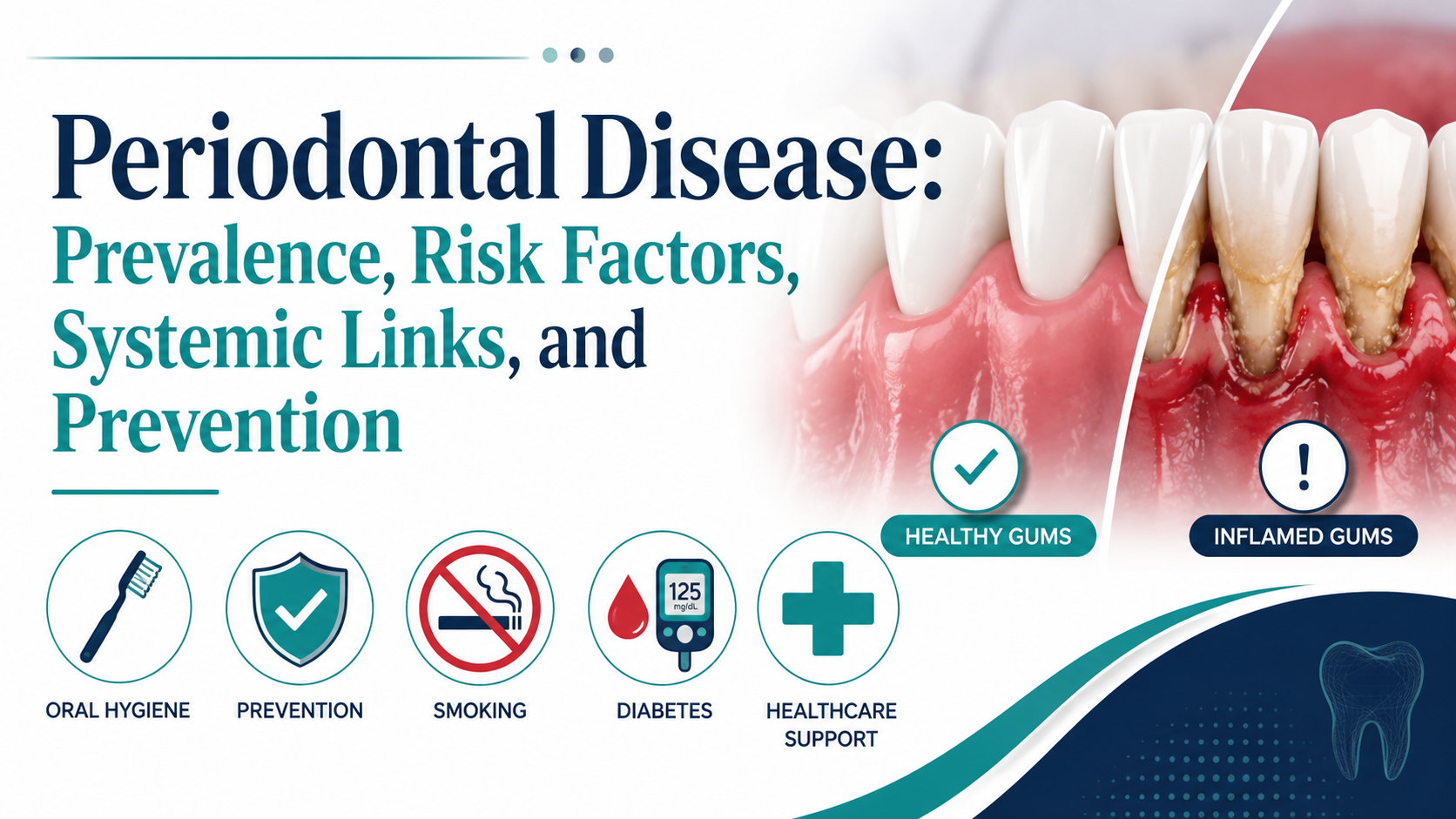
Periodontal Disease: Prevalence, Risk Factors, Systemic Links, and Prevention
Meta Description: Periodontal disease affects a large proportion of the global population and is linked with diabetes, cardiovascular disease, pregnancy outcomes, respiratory disease, kidney disease, and more. Learn the risk factors and prevention strategies every patient and dentist should know.
Periodontal disease is one of the most common oral health problems worldwide. Yet, many patients still treat bleeding gums as a minor issue. Some think it is due to hard brushing. Some ignore it because there is no pain. Some visit the dentist only when the tooth becomes loose.
As a periodontist, I see this as one of the biggest missed opportunities in dentistry. Periodontal disease is not only about gum bleeding. It is a chronic inflammatory disease that can damage the supporting tissues of the teeth and, in advanced stages, lead to tooth loss.
The review article “Prevalence of periodontal disease, its association with systemic diseases and prevention” by Muhammad Ashraf Nazir provides a useful public-health view of periodontal disease. The article discusses how common periodontal disease is, what risk factors increase its severity, how it is associated with systemic diseases, and what preventive strategies can reduce its burden.
The most important message is clear: periodontal disease is common, but it is also preventable and treatable when diagnosed early.
What Is Periodontal Disease?
Periodontal disease is a chronic inflammatory condition affecting the tissues that support the teeth. In advanced disease, there is loss of periodontal ligament attachment and destruction of surrounding alveolar bone.
In simple language, the foundation around the tooth begins to break down. If the disease is not controlled, the tooth may become mobile and eventually may be lost.
Common Warning Signs of Periodontal Disease
- Bleeding gums during brushing
- Swollen or reddish gums
- Bad breath
- Calculus deposits
- Gum recession
- Food lodgment between teeth
- Deep periodontal pockets
- Loose teeth
- Spacing or migration of teeth
- Pus discharge from gums in advanced cases
The difficulty is that periodontal disease often progresses silently. Pain may not appear until the disease is advanced. This is why routine periodontal screening is essential.
How Common Is Periodontal Disease?
According to the review, periodontal disease affects approximately 20-50% of the global population. This makes it a major public health concern rather than a small dental issue.
The article explains that prevalence data can vary depending on the population studied, diagnostic criteria used, number of teeth examined, and periodontal sites measured. This is important because under-recording can underestimate the true burden of disease.
The article also describes the use of the Community Periodontal Index to assess periodontal conditions at the population level. This index records findings such as bleeding on probing, calculus, shallow periodontal pockets, and deep periodontal pockets.
Why Prevalence Matters
When a disease affects such a large proportion of the population, the solution cannot be limited to treatment alone. Prevention, early diagnosis, patient education, community awareness, and interdisciplinary care become equally important.
Clinical message: Periodontal disease should be treated as a public health issue, not merely as an individual dental complaint.
Risk Factors for Periodontal Disease
The article divides periodontal risk factors into modifiable and non-modifiable factors. This is clinically useful because some risks can be changed through patient education and professional care, while others require closer monitoring.
Modifiable Risk Factors
1. Smoking
Smoking is one of the strongest modifiable risk factors for periodontal disease. The review reports that smokers are approximately three times more likely to have severe periodontal disease compared with non-smokers.
Smoking affects periodontal tissues in several ways. It can alter the oral microbial flora, impair host response, increase alveolar bone loss, increase tooth loss, and reduce the success of periodontal treatment.
Patient message: If you smoke and your gums bleed or your teeth are becoming loose, periodontal treatment alone is not enough. Smoking cessation is part of periodontal therapy.
2. Poor Oral Hygiene
Poor oral hygiene allows plaque and calculus to accumulate around the teeth and gums. This creates an environment where inflammation begins and periodontal destruction can progress.
The article emphasizes that proper oral hygiene and routine professional dental care can prevent further deterioration of periodontal structures.
3. Hormonal Changes in Females
Hormonal changes can influence periodontal tissues. Women may experience gingival inflammation during menstruation, ovulation, pregnancy, and menopause.
Pregnancy-related gingival changes are common, especially when plaque control is inadequate. Postmenopausal estrogen deficiency may also contribute to reduced bone density and tooth loss risk.
4. Diabetes Mellitus
Diabetes is one of the most important systemic risk factors for periodontal disease. The article explains that diabetes can play a major role in the initiation and progression of periodontal disease.
Diabetic patients with periodontitis may have higher levels of inflammatory mediators in gingival crevicular fluid and saliva. This supports the understanding that diabetes and periodontal disease have a strong inflammatory connection.
Clinically, this means that every diabetic patient should be screened for periodontal disease, and every patient with severe periodontitis should be asked about diabetes status.
5. Medications
Certain medications can increase susceptibility to periodontal problems by reducing salivary flow or causing gingival enlargement.
Examples include medications associated with dry mouth and drugs such as phenytoin, cyclosporine, and nifedipine, which can cause gingival overgrowth. Gingival enlargement makes plaque removal difficult and can worsen periodontal inflammation.
6. Stress
Stress can influence oral health by reducing salivary flow, altering immune response, worsening oral hygiene habits, and affecting inflammatory markers.
The article discusses evidence connecting stress with tooth loss, clinical attachment loss, probing depth, and poorer response to periodontal treatment.
Non-Modifiable Risk Factors
1. Age
The risk of periodontal disease increases with age. Older individuals often show a higher prevalence of periodontal attachment loss and deeper pockets.
This does not mean tooth loss is a normal part of aging. It means older patients require more careful periodontal monitoring and maintenance.
2. Heredity
Genetic susceptibility can make some individuals more vulnerable to periodontal disease than others. This explains why some patients develop severe disease despite moderate plaque levels, while others show slower progression.
Family history should therefore be considered during periodontal risk assessment.
Periodontal Disease and Systemic Diseases
One of the major strengths of the article is its discussion of the association between periodontal disease and systemic conditions.
Before discussing these links, it is important to be scientifically honest. Association does not always mean direct causation. Many systemic diseases and periodontal disease share common risk factors such as smoking, diabetes, poor diet, obesity, stress, age, and socioeconomic influences.
Still, periodontal disease should not be ignored because chronic oral inflammation may contribute to systemic inflammatory burden.
Periodontal Disease and Cardiovascular Disease
The article reports that periodontal disease is associated with cardiovascular diseases, including coronary heart disease, stroke, and peripheral artery disease.
One meta-analysis discussed in the review found that periodontal disease may be associated with a 19% increase in cardiovascular disease risk, and this relative risk may reach 44% among individuals aged 65 years and older.
This does not mean gum disease alone causes heart disease. The more balanced interpretation is that periodontal inflammation may contribute to systemic inflammation, especially in patients who already have cardiovascular risk factors.
What Dentists Should Do
- Record cardiovascular history during dental examination.
- Ask about hypertension, diabetes, smoking, and medications.
- Screen for periodontitis in high-risk patients.
- Explain periodontal treatment as infection and inflammation control.
- Encourage medical follow-up when systemic risk factors are uncontrolled.
Periodontal Disease and Diabetes
The review clearly supports a bidirectional relationship between diabetes and periodontal disease.
Diabetes increases susceptibility to periodontitis by affecting immunity, healing, inflammation, and periodontal tissue response. Periodontal disease may worsen insulin resistance and glycemic control through inflammatory pathways.
The article also notes that type 2 diabetic individuals with severe periodontal disease had a 3.2 times greater mortality risk compared with individuals with no or mild periodontitis.
Another clinically important point is that periodontal therapy has been shown to improve glycemic control for at least three months in type 2 diabetic patients.
Clinical message: For diabetic patients, periodontal treatment should be part of routine health maintenance, not an optional dental procedure.
Periodontal Disease and Obesity
The article discusses obesity as a risk factor for periodontal disease. Obesity is associated with oxidative stress and chronic low-grade inflammation, both of which may worsen periodontal tissue destruction.
This connection is important because obesity, diabetes, cardiovascular disease, and periodontal disease can overlap in the same patient. A preventive dental approach should therefore include lifestyle awareness, not just scaling and polishing.
Periodontal Disease and Pregnancy Outcomes
The review states that periodontitis is related to adverse pregnancy outcomes, including maternal infection, preterm birth, low birth weight, and preeclampsia.
The proposed mechanisms include microbiological and immunological factors. Periodontal inflammation may increase systemic inflammatory mediators, which may influence pregnancy outcomes in susceptible individuals.
However, the message must be communicated responsibly. We should not tell pregnant patients that gum disease will definitely cause preterm birth. The correct message is that gum health should be monitored before and during pregnancy.
Pregnant Patients Should Seek Dental Care If They Notice:
- Bleeding gums
- Swollen gums
- Bad breath
- Food lodgment
- Pain or pus discharge
- Loose teeth
Periodontal Disease and Rheumatoid Arthritis
The article notes that periodontal disease is prevalent among rheumatoid arthritis patients and that both diseases may share similar inflammatory mechanisms.
Patients with rheumatoid arthritis may also struggle with oral hygiene because of hand and joint limitations. This can increase plaque accumulation and periodontal risk.
Helpful Measures for Rheumatoid Arthritis Patients
- Powered toothbrushes
- Interdental brushes
- Shorter recall intervals
- Caregiver-assisted brushing if needed
- Regular periodontal maintenance
Periodontal Disease and Respiratory Diseases
The article discusses an association between periodontal disease and respiratory diseases such as chronic obstructive pulmonary disease and bacterial pneumonia.
Oral and periodontal microorganisms may contribute to respiratory infections, especially in vulnerable individuals such as elderly, hospitalized, bedridden, or medically compromised patients.
For such patients, oral hygiene should be seen as part of general care, not just cosmetic dental care.
Periodontal Disease and Chronic Kidney Disease
The review describes a bidirectional relationship between periodontal disease and chronic kidney disease. Studies discussed in the article suggest that patients with periodontitis may have increased risk of chronic kidney disease, and patients with chronic kidney disease may be more likely to develop periodontitis.
The article also reports that chronic kidney disease patients with periodontitis had higher mortality risk compared with chronic kidney disease patients without periodontal disease.
Clinically, this means medically compromised patients should not be allowed to carry untreated oral infection for long periods.
Periodontal Disease and Cancer
The review discusses associations between periodontal disease and cancers, including oral, esophageal, gastric, pancreatic, and tongue cancers.
One finding mentioned in the article is that the risk of tongue cancer increased with each millimeter of alveolar bone loss. However, this section requires cautious interpretation because tobacco, alcohol, poor oral hygiene, socioeconomic factors, nutrition, and access to care can all influence cancer risk.
Honest interpretation: Periodontal disease may be associated with some cancers, but it should not be presented as a proven direct cause of cancer.
The practical message for dentists is still very important: perform oral cancer screening, manage periodontal disease, counsel tobacco users, and refer suspicious lesions early.
Periodontal Disease and Cognitive Function
The article discusses modest evidence linking periodontal disease with impaired cognitive function in older adults.
This relationship may be influenced by inflammation, oral hygiene decline, aging, tooth loss, and systemic health. There is also a practical reverse relationship: patients with cognitive decline may be less able to maintain oral hygiene, increasing periodontal risk.
For elderly patients, prevention and caregiver-supported oral hygiene can make a meaningful difference.
Prevention of Periodontal Disease
The strongest practical section of this article is prevention. Periodontal disease is common, but it is also preventable and treatable when detected early.
The review supports an integrated public health approach based on common risk factors. This means that prevention of periodontal disease should be connected with prevention of other chronic diseases, especially because smoking, stress, poor diet, diabetes, and low socioeconomic status affect both oral and systemic health.
1. Proper Oral Hygiene
Proper mouth cleaning, tooth brushing, and interdental cleaning are essential for preventing periodontal disease.
Patients should understand that brushing only the visible tooth surface is not enough. Plaque commonly accumulates near the gum margin and between teeth, where periodontal inflammation begins.
Basic Home Care Instructions
- Brush twice daily using proper technique.
- Clean between teeth using floss or interdental brushes.
- Do not ignore bleeding during brushing.
- Use a toothbrush suitable for your gum condition.
- Replace toothbrushes regularly.
- Visit the dentist for professional cleaning and evaluation.
2. Healthy Diet
The article explains that diet plays a role in periodontal health. Poor nutrition can worsen periodontal tissue response and accelerate disease progression.
Vitamin C deficiency has been discussed as a risk factor for periodontal disease. A diet rich in fruits and vegetables and low in excessive fats and sugars supports healthy periodontal tissues.
Periodontal-Friendly Diet Habits
- Eat more fruits and vegetables.
- Maintain adequate vitamin C intake.
- Reduce excess sugar intake.
- Avoid frequent soft drinks and processed snacks.
- Support general metabolic health through balanced nutrition.
3. Fluoride and Antigingivitis Dentifrices
The review discusses the role of stannous fluoride in promoting gingival health. Stannous fluoride has antiplaque and antigingivitis effects and may reduce gingival bleeding.
Patients should choose oral care products based on their dental condition and professional advice rather than marketing claims alone.
4. Antimicrobial Agents
Antimicrobial agents such as chlorhexidine, essential oils, triclosan, and zinc have been used in toothpastes, gels, and mouthwashes to help control plaque and gingival inflammation.
The article mentions that chlorhexidine can reduce plaque and gingival inflammation. However, chlorhexidine should not be used casually for long periods without dental advice because it may cause staining, taste alteration, and other issues.
Clinical message: Mouthwash can support oral hygiene, but it cannot replace brushing, interdental cleaning, scaling, and periodontal treatment where required.
5. Smoking Cessation
Smoking cessation is one of the most powerful preventive strategies for periodontal health.
Smoking not only increases periodontal disease risk but also worsens treatment outcomes. Quitting smoking can help reduce further periodontal destruction and improve healing response.
6. Professional Scaling and Periodontal Maintenance
Scaling is one of the most common professional preventive measures for periodontal disease. It removes plaque and calculus deposits that patients cannot remove at home.
For patients with established periodontitis, one-time cleaning is usually not enough. They may require scaling and root planing, periodontal charting, radiographs, risk-factor control, and regular maintenance visits.
Who Needs More Frequent Periodontal Maintenance?
- Smokers
- Diabetic patients
- Patients with deep pockets
- Patients with previous periodontal treatment
- Patients with mobility or bone loss
- Pregnant patients with gum inflammation
- Elderly patients
- Patients with systemic disease burden
What Dentists Should Learn from This Article
This article reminds dentists that periodontal disease must be approached as both a clinical and public health problem.
Every dental clinic should have a basic periodontal screening protocol. A patient should not be told only, “You need cleaning.” The dentist should explain whether the patient has gingivitis, periodontitis, bone loss, pocketing, mobility, or systemic risk factors.
Minimum Periodontal Screening Checklist
- Bleeding on probing
- Probing pocket depth
- Clinical attachment loss
- Gingival recession
- Tooth mobility
- Furcation involvement
- Suppuration
- Radiographic bone loss
- Plaque and calculus deposits
- Smoking history
- Diabetes status
- Pregnancy status where relevant
- Medication history
- Stress and lifestyle factors
This type of screening improves diagnosis, patient education, referral decisions, and long-term outcomes.
What Patients Should Learn from This Article
For patients, the message is simple:
Bleeding gums are not normal. Loose teeth are not just aging. Bad breath may be a sign of infection. Gum disease can be prevented if detected early.
Patients should not wait for pain. Periodontal disease often damages the supporting bone silently. By the time mobility appears, the disease may already be advanced.
Patients Should Visit a Dentist or Periodontist If They Have:
- Bleeding gums
- Swollen gums
- Bad breath
- Receding gums
- Loose teeth
- Diabetes and gum bleeding
- Smoking habit and gum problems
- Food lodgment
- Family history of gum disease
- Pregnancy-related gum swelling
Critical Appraisal of the Article
This review is valuable because it provides a broad overview of periodontal disease prevalence, risk factors, systemic associations, and prevention strategies. It is especially useful from a public health and preventive dentistry perspective.
The article provides strong practical messages: periodontal disease is common, smoking and diabetes are major risk factors, systemic associations are clinically relevant, and prevention should be integrated with chronic disease prevention programs.
However, the article should be interpreted with scientific balance. Many reported links between periodontal disease and systemic diseases are associations. They may be influenced by shared risk factors such as smoking, diabetes, obesity, stress, poor diet, socioeconomic status, and aging.
Therefore, dentists should educate patients honestly. We should not exaggerate by saying that gum disease directly causes every systemic disease. But we should also not minimize periodontal disease as “just bleeding gums.”
Balanced conclusion: Periodontal disease is a common, preventable, inflammatory oral disease that may contribute to systemic health burden, especially in high-risk patients.
Frequently Asked Questions
1. How common is periodontal disease?
Periodontal disease affects approximately 20-50% of the global population. Its prevalence varies depending on age, oral hygiene, smoking, diabetes, socioeconomic status, and diagnostic criteria.
2. Is bleeding from gums normal?
No. Bleeding gums are usually a sign of inflammation. If bleeding occurs regularly during brushing or eating, a dental examination is needed.
3. Can smoking cause gum disease?
Smoking is one of the strongest risk factors for periodontal disease. Smokers are more likely to develop severe periodontal destruction and often respond less favorably to periodontal treatment.
4. Is diabetes linked with gum disease?
Yes. Diabetes and periodontal disease have a bidirectional relationship. Diabetes can worsen gum disease, and periodontal inflammation may make glycemic control more difficult.
5. Can periodontal treatment help diabetic patients?
Periodontal therapy may help improve glycemic control in some type 2 diabetic patients for a limited period. However, it should support medical diabetes care, not replace it.
6. Can gum disease affect pregnancy?
Periodontal disease has been associated with adverse pregnancy outcomes such as preterm birth and low birth weight. Pregnant patients should maintain good oral hygiene and seek dental care for bleeding or swollen gums.
7. Is mouthwash enough to prevent periodontitis?
No. Mouthwash may help reduce plaque and gingival inflammation, but it cannot replace brushing, interdental cleaning, professional scaling, and periodontal treatment when needed.
8. How can periodontal disease be prevented?
Prevention includes brushing twice daily, interdental cleaning, regular dental checkups, scaling when required, smoking cessation, diabetes control, healthy diet, stress management, and risk-based periodontal maintenance.
Conclusion
Periodontal disease is one of the most common oral diseases worldwide. It affects a large proportion of the population and can lead to tooth loss if ignored.
The review by Nazir highlights that periodontal disease is associated with several systemic conditions, including cardiovascular disease, diabetes, pregnancy complications, rheumatoid arthritis, respiratory disease, chronic kidney disease, cancer, and cognitive impairment.
At the same time, a responsible clinical interpretation is necessary. These associations do not always prove direct causation. Shared risk factors must be considered. Still, periodontal disease deserves serious attention because it is a chronic inflammatory condition that can affect oral function, quality of life, and possibly systemic health burden.
For dentists, the responsibility is to diagnose periodontal disease early and communicate clearly. For patients, the responsibility is to stop ignoring bleeding gums and seek timely care.
Periodontal disease is common, but it is preventable. Early diagnosis, proper oral hygiene, professional care, smoking cessation, diabetes control, and maintenance therapy can save teeth and improve quality of life.
Reference
Nazir MA. Prevalence of periodontal disease, its association with systemic diseases and prevention. International Journal of Health Sciences. 2017;1(2):72-80.
Disclaimer
This blog is for educational purposes only and should not be used as a substitute for professional dental or medical advice. If you have bleeding gums, loose teeth, diabetes, cardiovascular disease, pregnancy-related gum changes, respiratory disease, kidney disease, or any systemic health condition, consult your dentist, periodontist, and physician for individualized care.